


Sarah thought her accounting firm was too small to be a target. With just twelve employees and a solid client base of local businesses, she figured cybercriminals would go after bigger fish. That changed at 2:47 AM on a Tuesday when her phone buzzed with an alert from her bank: someone had just initiated a $47,000 wire transfer using her business account.
The email looked perfect. It came from her biggest client’s CFO, used his exact writing style, referenced their recent meeting, and even included the inside joke about her terrible office coffee. Sarah’s bookkeeper, who’d worked with this client for three years, didn’t hesitate to process the “urgent” payment request.
But the CFO was on vacation in Maine with no cell service. And the email? Generated by AI in less than thirty seconds.
Sarah’s story isn’t unique anymore. In 2025, small businesses like yours are facing a perfect storm: cybercriminals now have access to the same AI tools that fortune 500 companies use for legitimate business, but they’re using them to target you with surgical precision.
If you’re losing sleep over falling behind competitors who seem to “get” AI, or if clients are asking tougher questions about your security policies, you’re not paranoid. You’re paying attention. Because the threats targeting small businesses have evolved faster than most owners realize, and the old playbook of “keep your antivirus updated” isn’t going to cut it anymore.
The New Reality: Why Your Business Is in the Crosshairs
Think of cybercriminals like water: they always find the path of least resistance. Large corporations have IT teams, million-dollar security budgets, and layers of protection. You? You’re focused on running your business, not becoming a cybersecurity expert. That makes you the easier target, and AI has made targeting you incredibly affordable and effective.
Here’s what’s keeping business owners up at night: AI-powered cyber attacks jumped 47% globally in 2025, and small businesses are experiencing nearly double the attack rates compared to previous years. Worse yet, 97% of companies surveyed reported experiencing AI-related security issues or breaches.
The scariest part? These aren’t tech geniuses in hoodies. They’re “zero-knowledge threat actors”: people with no formal technical training who can now launch sophisticated attacks thanks to AI tools that do the heavy lifting for them.

The 7 AI-Powered Threats Hunting Your Business Right Now
1. AI-Enhanced Phishing Attacks (The Perfect Impersonator)
Remember when phishing emails were easy to spot because of terrible grammar and obvious mistakes? Those days are over. AI now generates emails that are indistinguishable from legitimate communication: perfect grammar, personalized details, and writing styles that match your actual business contacts.
These aren’t mass-market “Nigerian prince” scams anymore. AI analyzes your company’s public information, social media posts, and even your website’s tone to craft messages that feel authentic and urgent. In 2025 alone, there were 1,876 recorded phishing incidents targeting small businesses, with AI-generated attempts being significantly harder to detect than traditional ones.
How to Stop It: Implement a verification protocol for any unexpected requests, especially those involving money or sensitive information. If someone emails asking for urgent action, pick up the phone and call them directly using a number you already have: not one provided in the suspicious email.
2. Business Email Compromise with AI-Driven Impersonation (The CEO Fraud 2.0)
This is what happened to Sarah, and it’s becoming the weapon of choice for cybercriminals. AI analyzes writing patterns from social media, press releases, and previous emails to perfectly mimic how your CEO, biggest client, or trusted vendor communicates.
The AI doesn’t just copy words: it learns speech patterns, preferred phrases, and even the timing of when people typically send emails. The result is communications so convincing that 1,423 BEC scams were recorded in 2025, with 893 involving AI-enhanced attacks that fooled security-aware employees.
How to Stop It: Create a “trust but verify” culture. Any request for money transfers, password resets, or sensitive information should require multi-channel verification. If your “CEO” emails asking for an urgent wire transfer, call their cell phone before moving forward.
3. Adaptive Malware That Evades Detection (The Shape-Shifter)
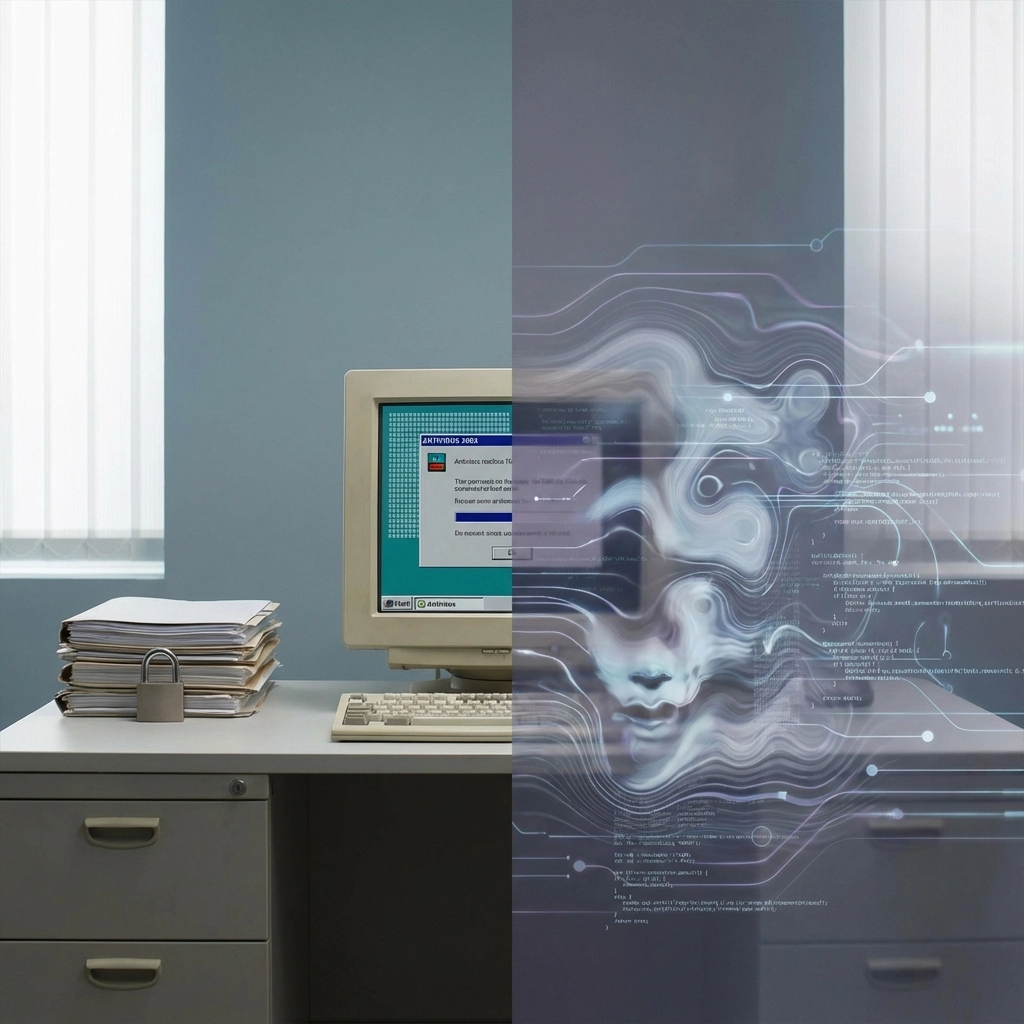
Traditional antivirus works like a bouncer at a club: it checks IDs against a list of known troublemakers. But AI-powered malware is like a master of disguise who changes appearance every few minutes. It evolves in real-time, modifying itself whenever it encounters defensive measures.
This means your antivirus software might detect and block the malware on Monday, but by Tuesday, that same malware has changed enough that your defenses no longer recognize it as a threat. It’s playing chess while your traditional security plays checkers.
How to Stop It: Move beyond signature-based antivirus to behavior-based security solutions. These AI-powered tools don’t just look for known bad actors: they watch for suspicious behavior patterns and can catch malware even when it’s wearing a disguise.
4. Sophisticated Voice and Deepfake Impersonation (The Voice Thief)
Imagine getting a panicked call from your business partner asking you to urgently transfer funds to cover a client emergency. Their voice sounds exactly right: same tone, same speech patterns, even the same way they clear their throat when stressed. Except your partner is sitting in a meeting across town and never made that call.
AI can now clone voices with just a few minutes of audio samples gathered from social media, recorded meetings, or even voicemails. These aren’t robotic-sounding fakes: they’re so convincing that even family members get fooled.
How to Stop It: Establish voice verification protocols for sensitive requests. Create code words or security questions that only the real person would know. If someone calls requesting urgent action, hang up and call them back on a number you know is legitimate.
5. Advanced Social Engineering Attacks (The Digital Detective)
AI doesn’t just create fake messages: it researches your business like a private investigator. It scrapes social media, analyzes your website, studies your LinkedIn connections, and even monitors your employees’ online activity to build detailed profiles.
Armed with this intelligence, cybercriminals craft attacks that feel incredibly personal and relevant. They know your recent business trips, current projects, and even your preferred vendors. When someone mentions your actual accountant by name and references your recent office move, your guard naturally drops.
How to Stop It: Audit your digital footprint regularly. Consider what information your business shares publicly and whether it could be used against you. Train your team to be cautious about sharing business details on social media, and implement information-sharing guidelines.
6. Session Hijacking and Token Theft (The Digital Pickpocket)
Think of your login credentials like a hotel key card. Session hijacking is like someone copying that key card while you’re not looking, then using it to access your room. AI makes this process faster and more effective by automating the detection and exploitation of vulnerable sessions.
Once attackers have your session tokens or authentication credentials, they can access your systems while appearing to be you. This is particularly dangerous because it bypasses many traditional security measures and can allow attackers to move through your network undetected.
How to Stop It: Use multi-factor authentication (MFA) everywhere possible, and implement session timeouts that require users to re-authenticate regularly. Monitor for unusual login patterns, such as access from unfamiliar locations or devices.

7. Cloud Supply Chain Exploits (The Weak Link Attack)
Your business likely uses dozens of cloud services and third-party vendors: accounting software, CRM systems, backup services, and more. AI helps attackers identify the weakest links in this chain and exploit them to gain access to your data.
It’s like having a fortress with strong walls but leaving the service entrance unlocked. Attackers don’t need to break through your main defenses if they can slip in through a vulnerable vendor connection.
How to Stop It: Conduct security assessments of your key vendors and cloud providers. Understand what data they have access to and how they protect it. Implement least-privilege access principles, ensuring vendors can only access the specific data they need for their services.
Your Action Plan: From Vulnerable to Protected
The good news? You don’t need to become a cybersecurity expert to protect your business. Here’s your practical roadmap:
Start with the Basics That Actually Matter:
- Enable multi-factor authentication on all business accounts
- Implement automated security patching for your systems
- Deploy AI-powered security solutions designed for small businesses
- Create verification protocols for sensitive requests
Build a Security-Aware Culture:
- Train your team specifically about AI-powered threats
- Establish clear procedures for verifying unusual requests
- Create an environment where asking “is this legitimate?” is encouraged, not discouraged
Monitor and Adapt:
- Use AI-driven tools that learn your normal business patterns and flag anomalies
- Stay informed about emerging threats through security newsletters and industry updates
- Regularly review and update your security policies
The Bottom Line: You’re Not Fighting This Alone
Sarah’s story had a semi-happy ending: her bank caught the fraudulent transfer before it cleared, and she implemented better security practices. But she learned an expensive lesson about the new reality of cyber threats.
You don’t have to learn it the hard way. The same AI technology that cybercriminals use to attack businesses can be used to defend them. The key is taking action before you become another cautionary tale.
The criminals are already using AI. The question isn’t whether you can afford to invest in modern cybersecurity: it’s whether you can afford not to. Because in 2025, the cost of falling behind isn’t just about losing competitive advantage. It’s about losing your business entirely.
Ready to stop worrying about becoming the next target and start focusing on growing your business with confidence? Let’s talk about building defenses that actually work.