


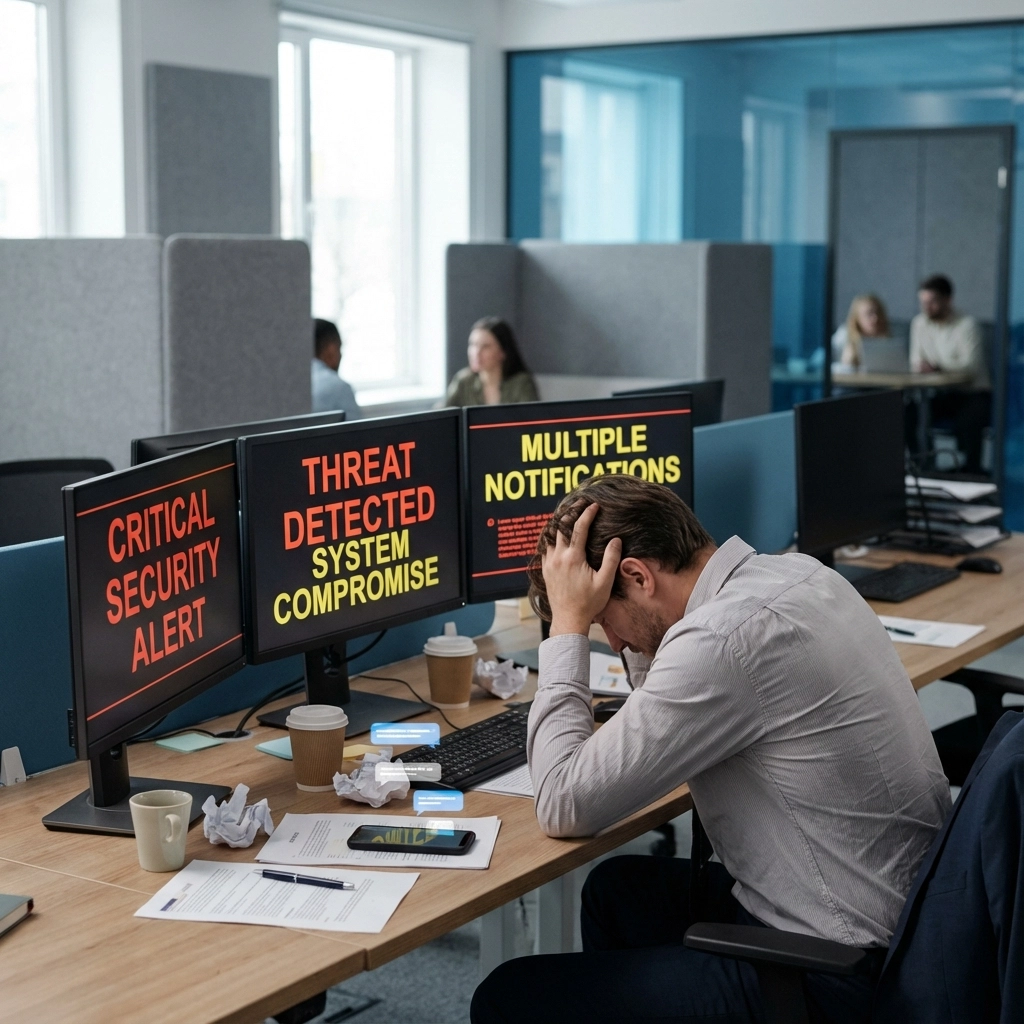
It’s 11 PM on a Thursday, and you’re still at your desk, juggling three different security alerts while your phone buzzes with another “urgent” compliance question from a client. Your coffee’s gone cold (again), your family’s already asleep, and that nagging voice in your head whispers, “What if I missed something? What if we get breached because I’m too exhausted to think straight?”
Sound familiar? You’re not alone.
Running cybersecurity for a small business feels like spinning plates on sticks: the moment you get one steady, two others start wobbling. New threats emerge daily, regulations change monthly, and clients ask increasingly sophisticated questions about your security posture. Meanwhile, you’re expected to be the expert, the guardian, and somehow still have energy left for strategic thinking.
The truth is, cybersecurity burnout isn’t a personal weakness: it’s an occupational hazard that 73% of security professionals report experiencing. But here’s what most articles won’t tell you: you don’t need a complete life overhaul or a massive budget to start feeling human again.
Why Small Business Security Teams Hit the Wall Faster
Small businesses face a unique perfect storm. Unlike enterprise teams with specialized roles, you’re wearing every hat: threat hunter, compliance officer, incident responder, and vendor manager: sometimes all in the same day.
Your clients depend on you to have answers about AI security, data protection, and emerging threats, but you barely have time to research the latest ransomware variant, let alone develop a coherent strategy around it. Every “quick question” from a client becomes a mini-research project because you refuse to give subpar advice.
Sound exhausting? That’s because it is.
The spinning plates analogy hits home because that’s exactly how cybersecurity feels: constant motion, constant vigilance, with the ever-present fear that one slip means everything crashes down. But what if I told you there’s a way to reduce the number of plates you’re spinning?
The Real Cost of Pushing Through
Here’s what happens when cybersecurity professionals try to “tough it out”:
- Decision fatigue leads to security gaps: When you’re mentally drained, you miss details, make shortcuts, or delay important updates
- Client confidence erodes: Exhaustion shows in slower response times and less thorough explanations
- Personal relationships suffer: Late nights and weekend “emergencies” become the norm, not the exception
- Physical symptoms appear: Headaches, sleep issues, digestive problems: your body’s way of waving a white flag
The irony? By trying to protect everyone else, you’re putting your business at greater risk through your own burnout.
Your Practical Recovery Plan: Start This Week
Immediate Relief (Next 48 Hours)
Set one non-negotiable boundary. Pick one evening this week where you won’t check work emails after 7 PM. I know it feels impossible, but start with just one night. Use your phone’s Do Not Disturb feature or app blockers to remove the temptation.
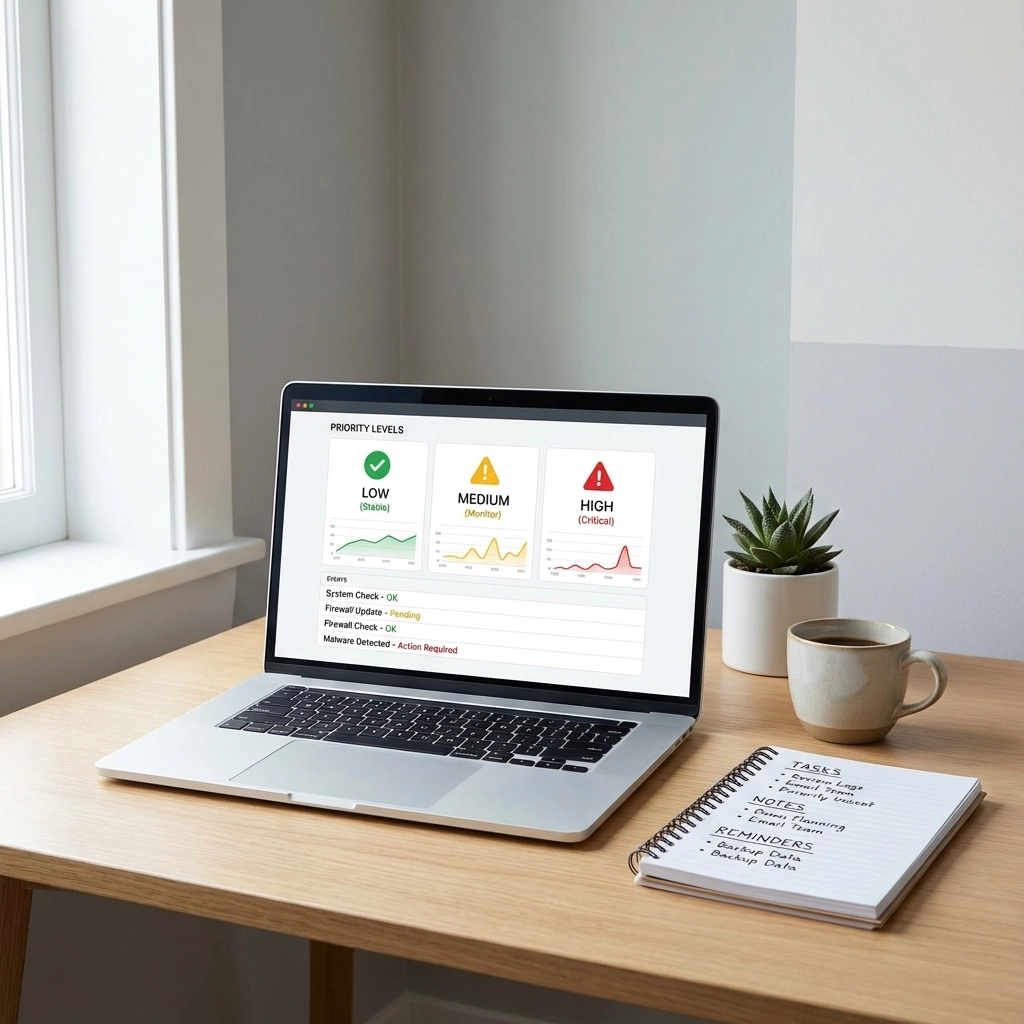
Create a “triage system” for alerts. Not every security notification requires immediate action. Categorize alerts into three buckets: fix now, fix this week, monitor and revisit. This simple system prevents every beep from feeling like a four-alarm fire.
Document your pressure points. Keep a quick log for three days noting: What tasks take the longest? Which client questions repeat most often? When do you feel most overwhelmed? This isn’t busywork: it’s intelligence gathering for your recovery strategy.
Short-Term Strategies (Next 30 Days)
Automate your biggest time-wasters. Look at your documentation from the previous week. Which repetitive tasks can you template, script, or delegate? Monthly security reports, basic client check-ins, and routine system updates are prime candidates.
Batch similar activities. Instead of switching between threat monitoring, client calls, and administrative tasks throughout the day, group similar work into focused blocks. Your brain will thank you for the reduced context switching.
Practice the “good enough” principle. Perfectionism is burnout’s best friend. That security assessment doesn’t need to be a masterpiece: it needs to be thorough and actionable. That client email doesn’t need perfect prose: it needs clear information.
Schedule real breaks. Not “I’ll eat lunch at my desk while monitoring alerts” breaks. Actual stepping-away-from-technology breaks. Even 15 minutes of walking outside can reset your mental state for the afternoon.
Medium-Term Solutions (Next 90 Days)
Build your knowledge base systematically. Instead of researching every client question from scratch, create templates and resources you can reuse. Common questions about AI security, compliance frameworks, and incident response become much easier when you have solid foundational materials.
Establish “office hours” for non-urgent client questions. Train clients that not everything requires immediate response. Set expectations that non-critical questions get answered during designated times, not at 10 PM on Saturday.

Create an incident response plan that protects your team. When security incidents happen (not if, when), have a process that includes: clear role definitions, communication protocols, and: critically: recovery time built in after resolution.
Invest in the right tools, not just more tools. A proper SIEM system that reduces false positives and provides contextual information can eliminate hours of manual investigation time. Sometimes spending money saves sanity.
The “Three-Plate” Method for Sustainable Security Management
Here’s a framework I call the “Three-Plate Method”: instead of spinning endless plates, you focus on just three at any given time:
Plate 1: Immediate Threats – Active incidents, critical vulnerabilities, urgent client needs
Plate 2: Proactive Maintenance – System updates, policy reviews, routine security tasks
Plate 3: Strategic Planning – Training, tool evaluation, process improvement
Everything else goes on a list for later consideration. This isn’t about doing less work: it’s about doing focused work without the mental chaos of trying to track everything simultaneously.
When to Escalate and Ask for Help
Recognize the warning signs that self-help isn’t enough:
- You’re having trouble sleeping because you’re mentally reviewing security scenarios
- You feel detached from work you used to find engaging
- Physical symptoms (headaches, digestive issues, muscle tension) persist despite lifestyle changes
- You’re making more mistakes or feeling slower to process information
These aren’t character flaws: they’re indicators that the workload has exceeded what one person can sustainably handle.
Have the conversation with leadership about resources. Frame it around business risk: “Our current security workload requires X hours, but we have capacity for Y. Here’s how this gap affects our risk posture and client service.”

Your First Three Wins (Start Today)
- Pick one evening this week for complete work disconnection. Mark it on your calendar like any other important appointment.
- Write down the five questions clients ask most frequently. These become your first templates to develop, saving you research time later.
- Set a phone alarm for three micro-breaks tomorrow: one mid-morning, one after lunch, one mid-afternoon. Just 5 minutes each, away from your screen.
These aren’t dramatic lifestyle changes: they’re small shifts that begin breaking the cycle of constant reactive mode.
Moving Forward Without Burning Out
Remember: sustainable cybersecurity isn’t about working harder, it’s about working strategically. Your clients need you to be sharp, responsive, and knowledgeable over the long term: not burned out and making mistakes because you’re running on fumes.
The goal isn’t to eliminate all pressure (impossible in cybersecurity), but to create systems and boundaries that let you handle pressure without it consuming your life.
You got into cybersecurity to protect people and businesses from real threats. That includes protecting yourself from the very real threat of burnout that could compromise everything you’ve worked to build.
Start with one boundary, one template, one real break. The plates will keep spinning: but with these strategies, you’ll be spinning fewer of them, with steadier hands, and a clearer mind.
Your business, your clients, and your family need you sustainable and sharp, not heroic and exhausted.